Receiving negative feedback can stir up a whirlwind of emotions. When your boss delivers this kind of feedback, whether it’s in a meeting or through mail, it’s a pivotal moment to respond with maturity and a forward-thinking mindset.
Here are some responses you should use when facing negative comments from your manager/boss.
Professional Responses To Accept Their Feedback
1. “Attention to your feedback is important to me. I see where the mistake happened and will make sure not to repeat it. Thank you for your suggestions; I’ll work on them right away.”
2. “It’s important for me to hear where things aren’t going as expected. I’m keen on turning these areas around with your advice and continued support.”
3. “I acknowledge these areas need more attention, and I’m ready to tackle them head-on. It would help to review these points regularly if you’re available for brief check-ins.”
4. “This is really insightful, thank you. I hadn’t viewed it from that angle before.”
5. “Your perspective is very helpful, and I see a lot of truth in what you’re saying.”
6. “This feedback is a great learning opportunity for me. I’m considering some strategies to improve and would love your feedback on them in our next meeting.”
7. “Feedback is the breakfast of champions, right? I’m ready to gear up and make the changes you suggest.”
Instead of becoming defensive or dismissive, which can often occur in response to criticism, these statements are welcoming and appreciative of the feedback.
Such a receptive and thoughtful approach is likely to enhance personal performance and improve relationships within any professional team.
Confidently Reassuring Responses
1. “I value your insight. It’s crucial for me to know this so I can improve and do better.”
2. “I understand the concerns and am already thinking about how to approach this differently. Perhaps I could share my action plan with you to get your thoughts?”
3. “I appreciate your perspective—this gives me a clear direction for improvement. I’ll start implementing these changes today.”
4. “Thank you for guiding me—I’ll make the necessary adjustments immediately.”
SUGGESTED: 23 Best Ways To Say “I Will Do My Best” That All Bosses Love
By committing to immediate action, these responses exude a sense of urgency and immediacy in dealing with the feedback. Using these responses, you convey a sense of urgency and dedication to personal and professional development.
Responses Asking For Clarity
1. “I’m sorry if I misunderstood something. What should I change in my work to meet your expectations?”
2. “I’d like to avoid further confusion. Could you clarify what aspects of my work were not as expected?”
3. “I want to ensure I fully grasp your suggestions. Would it be possible to walk through these points together using a reference?”
4. “I’m committed to improving and would appreciate your advice. Could you recommend resources or training that could help me develop in the areas you mentioned?”
This method of seeking clarity not only reduces the chance of repeated mistakes but also enhances the understanding of the expectations and standards required.
This aspect is particularly impactful because it moves beyond the immediate feedback and looks towards long-term improvement.
How Should You Accept Negative Feedback from My Boss?
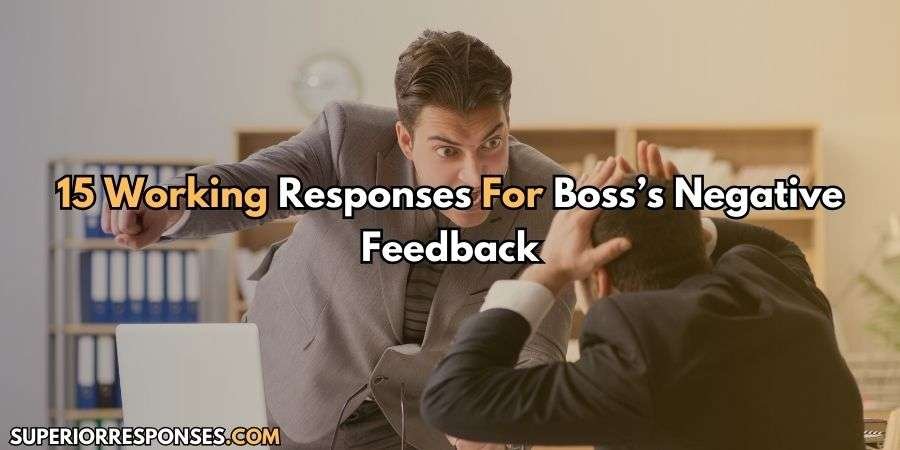
When receiving negative feedback from your boss, the initial step is to listen attentively and without interruption, regardless of the feedback’s tone or content. This demonstrates respect and a willingness to understand your boss’s perspective.
Even if the feedback feels harsh or undeserved, keeping an open mind helps you absorb and consider what’s being said.
Next, once your boss has finished sharing their thoughts, take time to reflect. This pause allows you to formulate a thoughtful and measured response. Acknowledge the feedback given, express your understanding of the issues, and share your own perspective if necessary.
SUGGESTED: No More Stress – 15 Strategic Replies To ‘ASAP’ In Emails
Finally, propose a concrete, actionable plan with specific steps to rectify the situation and prevent future issues. This might include time management techniques or ways to ensure tasks are completed more efficiently and on time.
What To Do For Unfair Negative Feedback From Boss/Managers?
Resist the urge to react immediately or become defensive, as this can exacerbate the situation. Instead, take some time to process the feedback and consider its merit. Analyze the comments objectively and determine if there are any truths or valid criticisms in the feedback you can learn from.
If after careful consideration, the feedback still feels unjust, it’s advisable to seek a second opinion. Discuss the situation with a trusted colleague or mentor who can provide an objective perspective.
Finally, respond to the feedback by drafting a thoughtful email or requesting a follow-up meeting to discuss your thoughts. In your response, acknowledge any valid points, express appreciation for the feedback, and address any misunderstandings clearly and respectfully.
SUGGESTED: 33+ Appreciation Email Replies to Boost Your Reputation
How Should You React In The Moment When Receiving Negative Feedback?
Your first reaction might be to feel flustered or defensive. It’s important to breathe, remain calm, and maintain a professional demeanor. In this moment, acknowledge the feedback with a simple “thanks for your feedback”, which shows appreciation for the honesty and the willingness of your boss to help you grow.
Asking clarifying questions can also demonstrate that you are interested in truly understanding the issues at hand and are committed to improving your performance.
Lastly, after the initial discussion, outline realistic steps you can achieve to improve based on the feedback. Be engaged in developing a plan that can help both you and the team.
Remember, receiving feedback—even when it stings—is a learning experience that, if handled well, can enhance your professional capabilities and strengthen your position within the team.
Related Posts You May Also Like:
17 Responses To Overcome Their ‘That’s Not My Job’ Attitude